
Why Reliable Customers Suddenly Become Slow Pay
Most unpaid commercial accounts do not begin with conflict. They begin with delays. A customer that paid consistently for years begins requesting extensions. Payment dates move quietly. Internal approvals take longer. The receivable grows older while the relationship appears unchanged.
This shift often reflects cash flow pressure that has not yet surfaced publicly. Growth, operational disruption, and financing constraints can all produce the same result: vendors waiting longer to be paid.
This is where disciplined accounts receivable management becomes important. Without structure, aging balances accumulate quietly until recovery becomes more difficult.
What Chapter 11 Means for Business Creditors
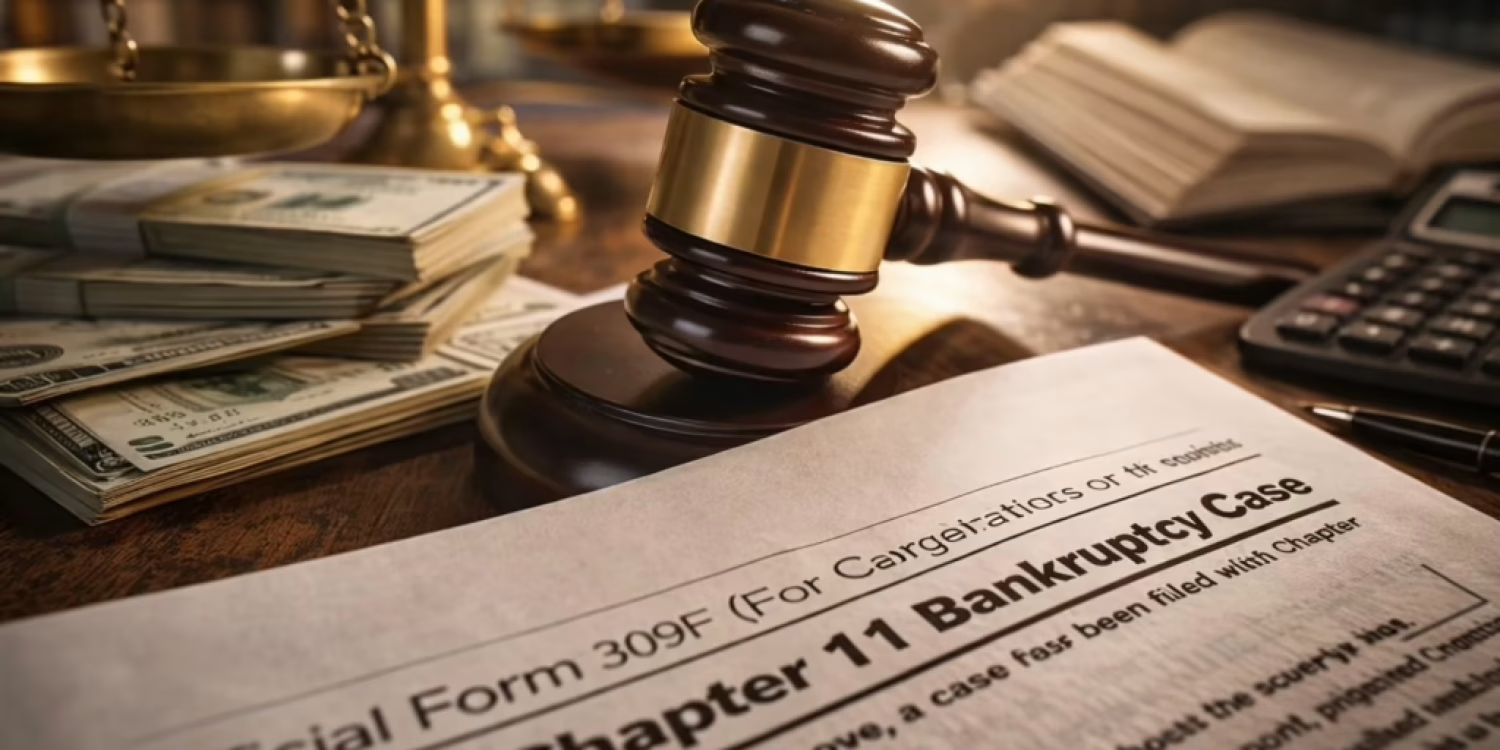
Chapter 11 is often misunderstood. It does not always mean the business is closing. In many cases, it continues operating while restructuring its financial obligations.
For creditors, the practical impact is timing. Once bankruptcy protection begins, collection options change, communication becomes more formal, and documentation becomes central to recovery.
If you want a deeper explanation of how restructuring affects unpaid business invoices, see: Business Bankruptcies and Commercial Collections .
Debtor-in-Possession: Why It Matters
A company operating under Chapter 11 often becomes a debtor-in-possession, meaning it continues operating while reorganizing under court supervision.
This distinction affects how creditors communicate, document claims, and pursue payment.
If you are unfamiliar with the operational impact, see: Debtor-in-Possession Explained .
Your Accounts Receivable Aging Schedule as an Early Signal
Your accounts receivable aging schedule is one of the most useful risk indicators available. It shows not just who owes money, but how payment behavior is changing.
When balances begin accumulating in older categories, it often signals structural financial strain rather than a temporary delay.
National economic data reflects this reality as well. The U.S. Census Bureau publishes ongoing research on business conditions, including financial stress and payment pressures: U.S. Census Bureau Business Trends and Outlook Survey .
These trends reinforce what many credit teams already see internally: payment slowdowns often precede larger financial events.
You can also evaluate collection performance using tools like the DSO calculator , which helps measure how long receivables remain outstanding.
What to Do Before Bankruptcy Happens
Strengthen documentation
Make sure invoices, agreements, purchase orders, delivery records, and change orders are organized and easy to retrieve. If you ever need to validate a claim or timeline, this reduces the scramble.
Escalate when the pattern changes
Repeated delays are more informative than a single missed date. If a customer needs “one more week” multiple times, treat it as a signal, not a one-off.
Related read: Why Prompt Action Matters in Commercial Collections .
Know the legal backdrop
Collection rules vary by jurisdiction, and multi-state operations can introduce extra steps. Reference: Debt Collection Laws by State for a starting point, especially when you sell or service across state lines.
What to Do After Bankruptcy Happens
Confirm the legal entity and the paper trail
Make sure you are referencing the correct business entity (and any related entities) before you take next steps. Misidentifying the debtor can cause delays and unnecessary rework.
Keep communication clear and consistent
Preserve records of invoices, notices, and any prior arrangements. Avoid improvised “side deals” that are not documented or aligned with the formal process.
For process discipline, see: Collection Training and Workflow Guidance .
How Burt & Associates Supports Creditors
Burt & Associates works with businesses managing overdue commercial receivables through structured recovery, documentation-first workflows, and consistent follow-up.
Learn more: Commercial Debt Collection Services .
To begin placement: Place an Account (if you are already a customer) or get a free quote Analysis and Quote .
Final Takeaway
Bankruptcy changes how recovery works, but it does not erase recovery opportunities. What matters most is how early you recognize the risk, how clean your documentation is, and whether you move with a process instead of improvising.
As a finance manager, you understand the importance of a smooth and timely financial close. But even with the best strategies, challenges can arise. That’s where the right partnership can make all the difference. At Burt and Associates, we specialize in tailored, ethical debt collection practices that align with your business goals. By integrating our services, you can focus on optimizing your financial close process without the added stress of managing overdue accounts.
We know every business is unique, and that’s why we work closely with you to develop a customized approach that meets your specific needs. Whether you’re dealing with complex financial situations or simply looking to improve cash flow, our team is here to support you every step of the way.
Let’s turn those strategies into results together. Take the first step towards a more efficient financial close by reaching out to us today.
Let's Work Together to Optimize Your Business!
At Burt and Associates, we specialize in business-to-business (B2B) debt collection, prioritizing strong business relationships and tailored ethical recovery practices. Choose the approach that best fits your needs, and let’s take the first step toward improving your cash flow.
If you’re ready to discuss your overdue accounts and explore customized solutions, schedule a free consultation with one of our experts.
Schedule an Appointment.
Commercial Collection Topics
- What Does Business Debt Resolution Really Mean? When businesses fall behind on payments, the path forward can seem confusing and overwhelming. Terms like "debt recovery," "collection," and...
- Right of Offset and Skip Tracing: Two Powerful Tools in Modern B2B Debt Collection In business-to-business credit environments, companies must navigate a complex landscape of regulations, financial risks, and operational challenges. Two industry terms...
- Fair and Accurate Credit Transaction Act (FACTA) Defines what the Fair and Accurate Credit Transaction Act (FACTA) is and how it protects....
- November Budget Checks: Preparing Your Business Clients for Year-End Financial Reviews As November arrives, many businesses shift their focus from Q4 sales targets to year-end financial reviews. For B2B companies, this...